
Pakistan Federal Union of Journalists (PFUJ)
The Pakistan Federal Union of Journalists (PFUJ) is the country’s premier federal representative organization of journalists, with a distinguished legacy spanning more than seven decades. Founded in 1950, PFUJ emerged in response to the growing need for a unified, democratic voice to protect the professional, social, and economic rights of journalists in Pakistan. Since its inception, the Union has been instrumental in defending press freedom, advocating labor rights, ensuring journalists’ safety, and promoting professional independence, establishing itself as a cornerstone of Pakistan’s democratic and media landscape.
Historical Evolution and Key Milestones
- 1950s–1960s: PFUJ was established during the early years of Pakistan to unite journalists under a single federal platform. It played a critical role in highlighting issues of censorship, inadequate wages, and working conditions, particularly under military regimes.
- 1970s: During this decade, PFUJ actively campaigned for the rights of journalists under authoritarian constraints, including state censorship and arbitrary dismissals. The Union also contributed to shaping labor legislation applicable to media workers.
- 1980s–1990s: PFUJ intensified advocacy for Wage Board implementation, job security, and welfare schemes for journalists. The Union also engaged with international journalist organizations, establishing Pakistan’s presence in global media freedom forums.
- 2000s: PFUJ expanded its engagement to legal battles for press freedom, challenging arbitrary bans, censorship laws, and threats to journalists’ safety. This era saw PFUJ emphasizing collective bargaining and contracts protections under labor law.
- 2010s–2020s: PFUJ’s role became critical amid digital media growth, mass layoffs, unpaid salaries, and increasing threats to journalists’ lives. The Union advocated for stronger protections under media legislation and successfully lobbied for reforms ensuring journalists’ rights, safety, and welfare.
Organizational Structure and Representation
PFUJ operates through its affiliated provincial and regional unions, representing journalists from print, broadcast, and digital media across Pakistan. This federated structure ensures inclusive representation and coordination of advocacy efforts at both local and national levels.
Core Functions and Advocacy
As the collective voice of journalists, PFUJ engages in:
- Policy advocacy and legal interventions with government bodies, regulatory authorities, courts, and media houses.
- Collective bargaining and labor negotiations, ensuring fair wages, social protections, and contract rights.
- Promotion of ethical journalism through training, codes of conduct, and professional standards.
- Safety and welfare initiatives, including emergency legal aid, health support, and protection against harassment and violence.
Constitutional Anchoring (PFUJ Constitution 2025)
PFUJ’s policies, actions, and governance are guided by the PFUJ Constitution 2025, which explicitly codifies its mandate and responsibilities:
- Article 2 & 3: Democratic representation, transparent elections, and accountability of office-bearers.
- Article 5 & 6: Protection of journalists’ labor rights, wage security, welfare benefits, and social safeguards.
- Article 10 & 11: Upholding press freedom, professional independence, and adherence to journalistic ethics.
- Article 15 & 16: Authority for collective bargaining, dispute resolution, and coordinated advocacy campaigns.
- Article 20: Measures to ensure journalists’ safety, emergency assistance, and legal support against harassment or threats.
- Article 25–28: Engagement with national and international bodies for solidarity, training, and exchange of best practices in media advocacy.
Current Challenges and PFUJ’s Role
Pakistan’s media landscape faces unprecedented challenges:
- Non-implementation of Wage Board awards
- Contractual exploitation and mass layoffs
- Delayed or unpaid salaries
- Censorship, restrictions, and political pressure
- Rising threats to journalists’ lives and safety
In response, PFUJ actively engages with policy-makers, media owners, courts, and international partners to secure enforceable protections. Its campaigns combine legal advocacy, collective action, and media campaigns to defend journalists’ rights and press freedom.
Vision, Principles, and Commitment
PFUJ is guided by transparency, accountability, democratic decision-making, and collective responsibility. Its enduring belief is that a free, independent, and economically secure press is vital for an informed society and the preservation of democracy in Pakistan. Through sustained advocacy, solidarity initiatives, and ethical training, PFUJ remains committed to:
- Defending journalists’ dignity, rights, and safety
- Strengthening professional standards and ethical journalism
- Ensuring journalists have fair wages, secure employment, and safe working conditions
PFUJ’s history reflects a continuous struggle for justice, resilience in the face of adversity, and principled leadership in safeguarding the interests of Pakistan’s journalists. Its integration of constitutional mandates (PFUJ Constitution 2025) with practical advocacy ensures that the Union remains a trusted voice for journalists at the national and international levels.
Rana Muhammad Azeem President
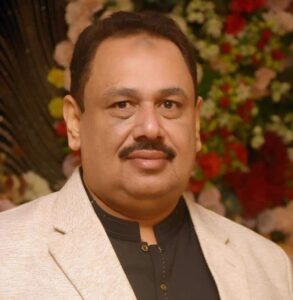 The Pakistan Federal Union of Journalists (PFUJ), the country’s sole federal representative body of journalists, has consistently led the struggle for press freedom, labor rights, and professional protection. As a democratic and constitutionally mandated trade union, PFUJ is committed to resisting all forms of censorship, economic exploitation, institutional injustice, and political or commercial pressure on journalism.
Pakistan’s media sector is currently facing a systemic crisis marked by non-implementation of Wage Board awards, mass layoffs, salary delays, unsafe working conditions, violence against journalists, and increasing legal and administrative pressure. PFUJ considers these practices a direct threat not only to journalists’ livelihoods but also to freedom of expression and democratic governance.
PFUJ maintains a clear and uncompromising policy position:
- Implementation of Wage Board awards is a legal obligation and must be enforced without exception;
- Illegal layoffs, contractual exploitation, and non-payment of salaries are unacceptable and must be reversed;
- The safety and security of journalists is a fundamental responsibility of the state and cannot be compromised.
Freedom of the press is the backbone of democracy. A media industry built on fear, insecurity, and economic coercion cannot serve the public interest. PFUJ therefore calls upon the government, media owners, regulatory authorities, and relevant institutions to adopt binding policy measures that ensure fair wages, job security, safe working environments, and respect for journalists’ professional independence.
PFUJ will continue to pursue collective action, legal remedies, policy advocacy, and national and international engagement to defend the dignity, safety, and economic rights of journalists. We remain resolute in our commitment to protect press freedom and to uphold the constitutional and democratic principles upon which an informed and just society depends.
Shakeel Ahmed Secretary General
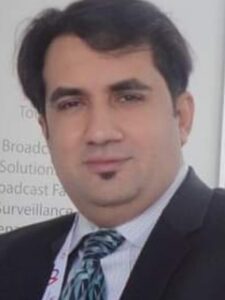 The Pakistan Federal Union of Journalists (PFUJ) remains steadfast in its constitutional and democratic responsibility to defend journalists’ labor rights, professional independence, and personal safety across Pakistan. As the collective voice of working journalists, PFUJ rejects all practices that undermine job security, fair wages, and freedom of expression.
The media industry is witnessing an alarming deterioration, characterized by the persistent non-implementation of Wage Board awards, widespread layoffs, delayed or unpaid salaries, forced contractual employment, and growing threats to the safety of journalists. These trends represent a systematic erosion of labor protections and pose a serious challenge to democratic accountability and public access to credible information.
PFUJ’s policy position is clear and non-negotiable:
- Wage Board awards must be implemented in letter and spirit, without delay or discrimination;
- Illegal layoffs, forced downsizing, and salary arrears must be addressed through enforceable legal and regulatory action;
- Journalists’ safety, including protection from violence, harassment, and intimidation, must be ensured through effective state mechanisms.
A media environment driven by fear, economic coercion, and institutional pressure cannot fulfill its democratic role. PFUJ therefore calls upon the government, regulatory authorities, and media owners to adopt binding policies that guarantee fair labor practices, secure employment, and a safe working environment for journalists.
As Secretary General, I reaffirm that PFUJ will continue to mobilize collective action, pursue legal remedies, strengthen policy advocacy, and engage with national and international partners to protect journalists’ rights. We will not accept silence, compromise, or selective enforcement when the dignity, safety, and livelihoods of journalists are at stake.
Sherbano Finance Secretary:
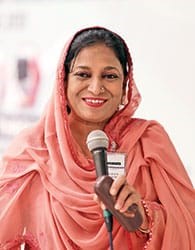 The Pakistan Federal Union of Journalists (PFUJ) upholds transparency, accountability, and financial integrity as core pillars of its democratic and constitutional mandate. Sound financial governance is not only essential for organizational sustainability but also for protecting journalists’ rights and ensuring the credibility of collective advocacy.
The ongoing crisis in Pakistan’s media industry—marked by wage violations, unpaid salaries, layoffs, and increasing insecurity—has serious financial and economic consequences for journalists and their families. PFUJ considers economic justice an inseparable component of press freedom and believes that denial of fair wages and lawful entitlements is a direct assault on professional independence.
PFUJ’s financial policy stance is clear:
- Timely payment of wages and enforcement of Wage Board awards are legal and moral obligations;
- Financial transparency and accountability within media organizations must be strengthened and regulated;
- Public and donor resources supporting media development must be utilized responsibly and in the public interest.
As Secretary Finance, I reaffirm PFUJ’s commitment to prudent financial management, transparent accounting, and responsible use of funds in line with our constitution and approved financial policies. PFUJ will continue to advocate for enforceable financial protections for journalists and will support all legal and policy measures aimed at ensuring economic security, dignity, and sustainability for media professionals.